
Systems
how wisdom is organized
Indic civilization organized knowledge into living systems — ways of understanding the self, body, language, time, number, cosmos, health, place, arts, society, law, nature, work, and transmission.
Knowledge organized for life
The Systems layer of Vidyame explores the structured knowledge traditions that emerged across Indic civilization. These systems helped organize human life at many levels: from the inner disciplines of yoga and sādhana to astronomy, grammar, medicine, architecture, music, governance, law, agriculture, education, and social order.
They show a civilization that did not separate knowledge from life. Knowledge was meant to be studied, practiced, transmitted, refined, and lived.
01cluster 01 · Inner Life & Healthcoming
body, breath, mind, and consciousness
Yoga & Inner Technologies
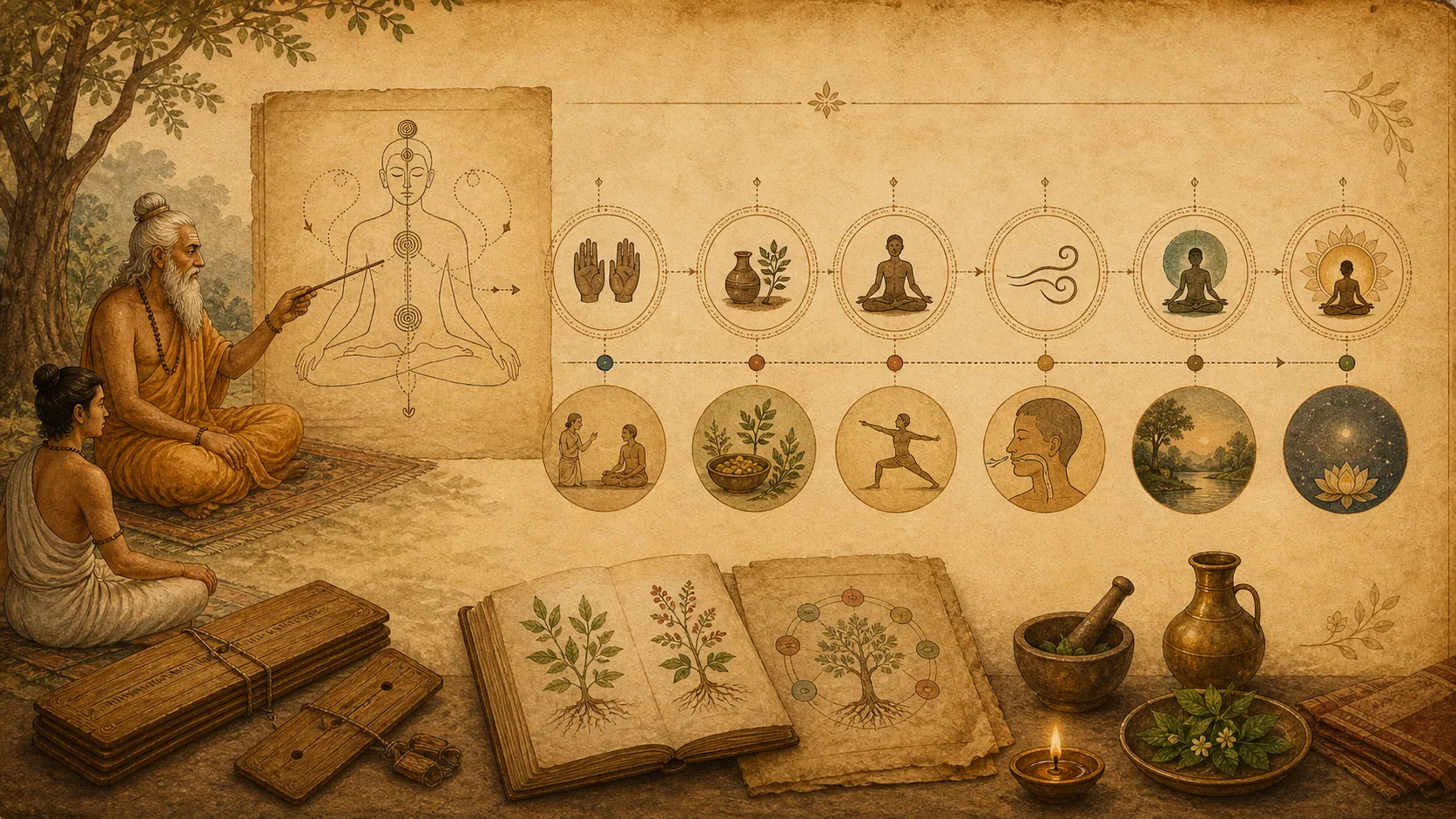
Yoga is a system for refining body, breath, senses, attention, mind, and consciousness. It is not only physical exercise, but a disciplined way to cultivate steadiness, self-mastery, and inner alignment.
Āsana · Prāṇāyāma · Dhāraṇā · Dhyāna · Yama · Niyama · Pratyāhāra · Samādhi · Self-mastery · Mind discipline

02cluster 01 · Inner Life & Healthcoming
health, food, rhythm, and balance
Ayurveda & Life Sciences
Ayurveda is a life-health system that understands the body in relation to food, digestion, sleep, seasons, age, temperament, environment, and daily rhythm.
Āhāra · Dinacharya · Ṛtucharya · Doṣa · Agni · Herbs · Food · Preventive living · Seasonal rhythm · Body-mind balance
Presented as educational and cultural knowledge, not medical diagnosis or treatment.
03cluster 02 · Language, Text & Inquirycoming
sound, meaning, roots, and expression
Language, Grammar & Meaning
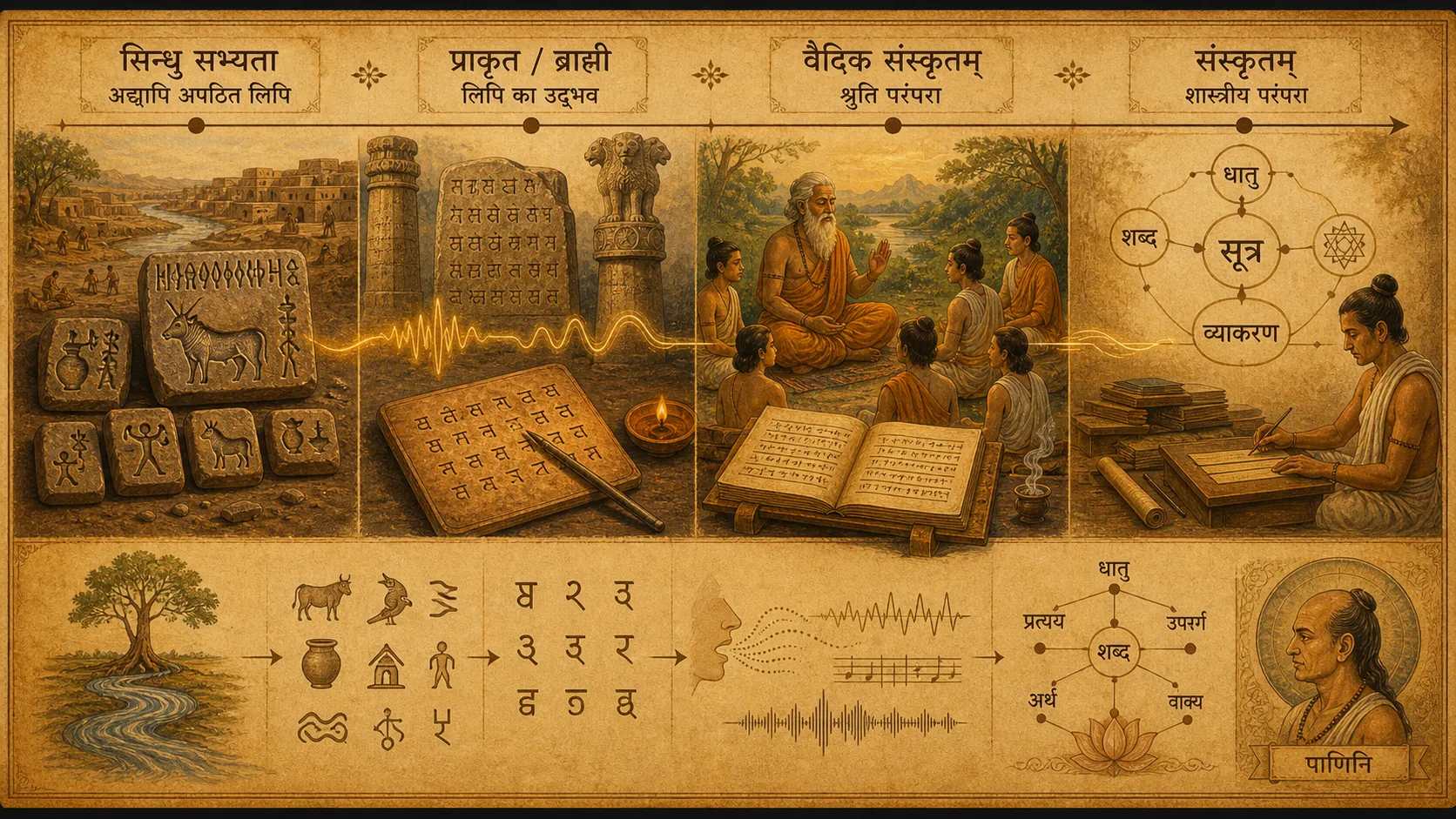
Indic civilization developed deep systems of language, grammar, sound, meaning, and expression. Sanskrit is central, while the larger civilization also includes regional language and literary systems.
Sanskrit · Vyākaraṇa · Śikṣā · Nirukta · Chandas · Dhātu · Śabda · Meaning · Poetics · Tamil grammar · Regional knowledge languages
04cluster 02 · Language, Text & Inquirycoming
precision in recitation, timing, and interpretation
Vedāṅga & Textual Preservation
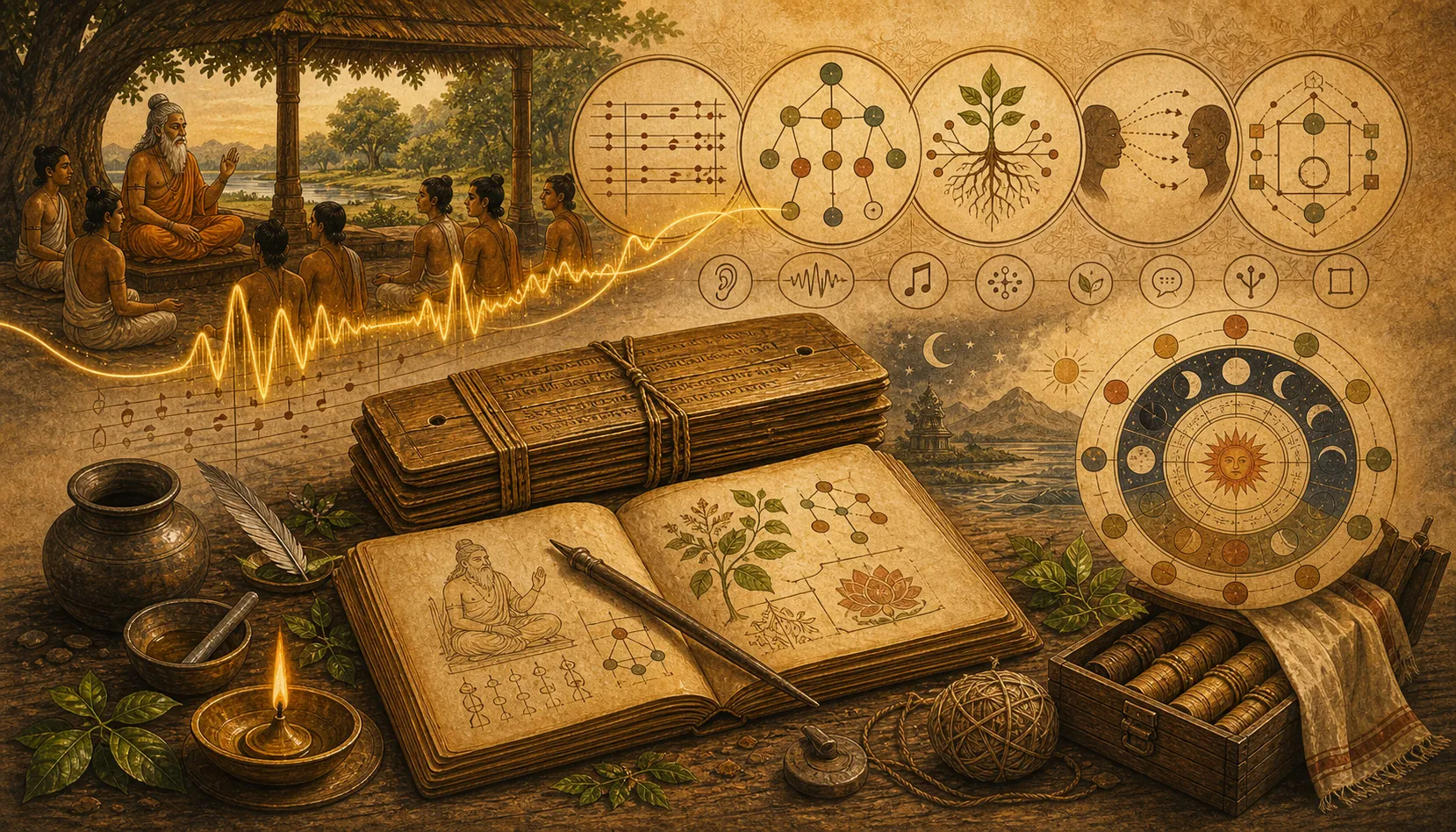
The Vedāṅgas are knowledge limbs that helped preserve, recite, interpret, time, and apply Vedic knowledge with precision.
Śikṣā · Chandas · Vyākaraṇa · Nirukta · Kalpa · Jyotisha · Recitation · Pronunciation · Meter · Interpretation · Sacred time · Textual precision
05cluster 02 · Language, Text & Inquirycoming
knowledge, reality, truth, and liberation
Logic, Darśana & Inquiry
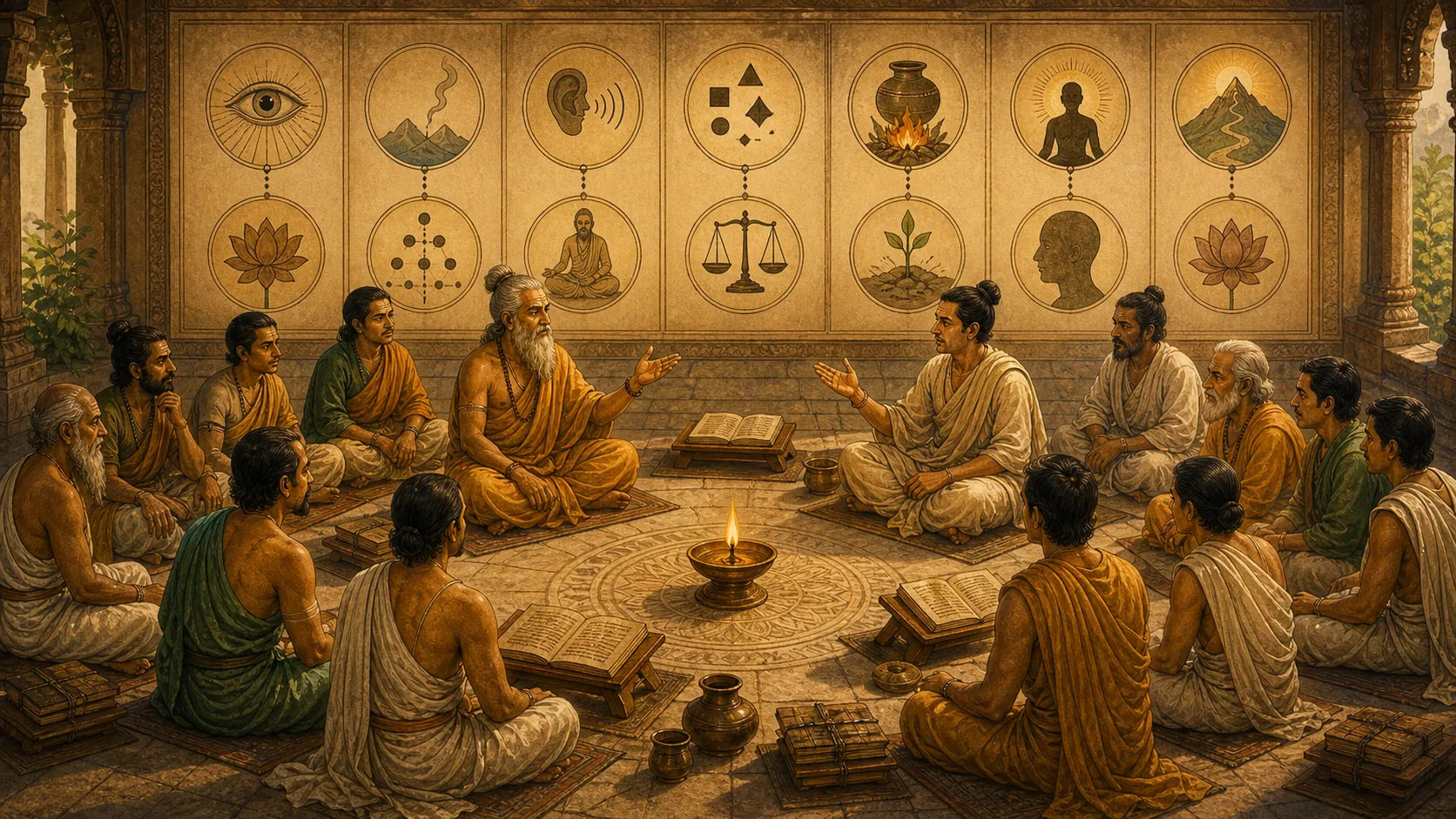
Indic Darśanas developed rigorous systems of inquiry into knowledge, reality, self, causation, Īśvara, liberation, perception, inference, testimony, and truth. Vidyame distinguishes their pramāṇas, foundational texts, commentators, siddhāntas, agreements, and disagreements rather than treating them as one generalized philosophy.
Nyāya · Vaiśeṣika · Sāṃkhya · Yoga · Mīmāṃsā · Vedānta · Pramāṇa · Īśvara · Inference · Testimony · Debate · Siddhānta · Self · Liberation
06cluster 03 · Time, Number & Cosmoscoming
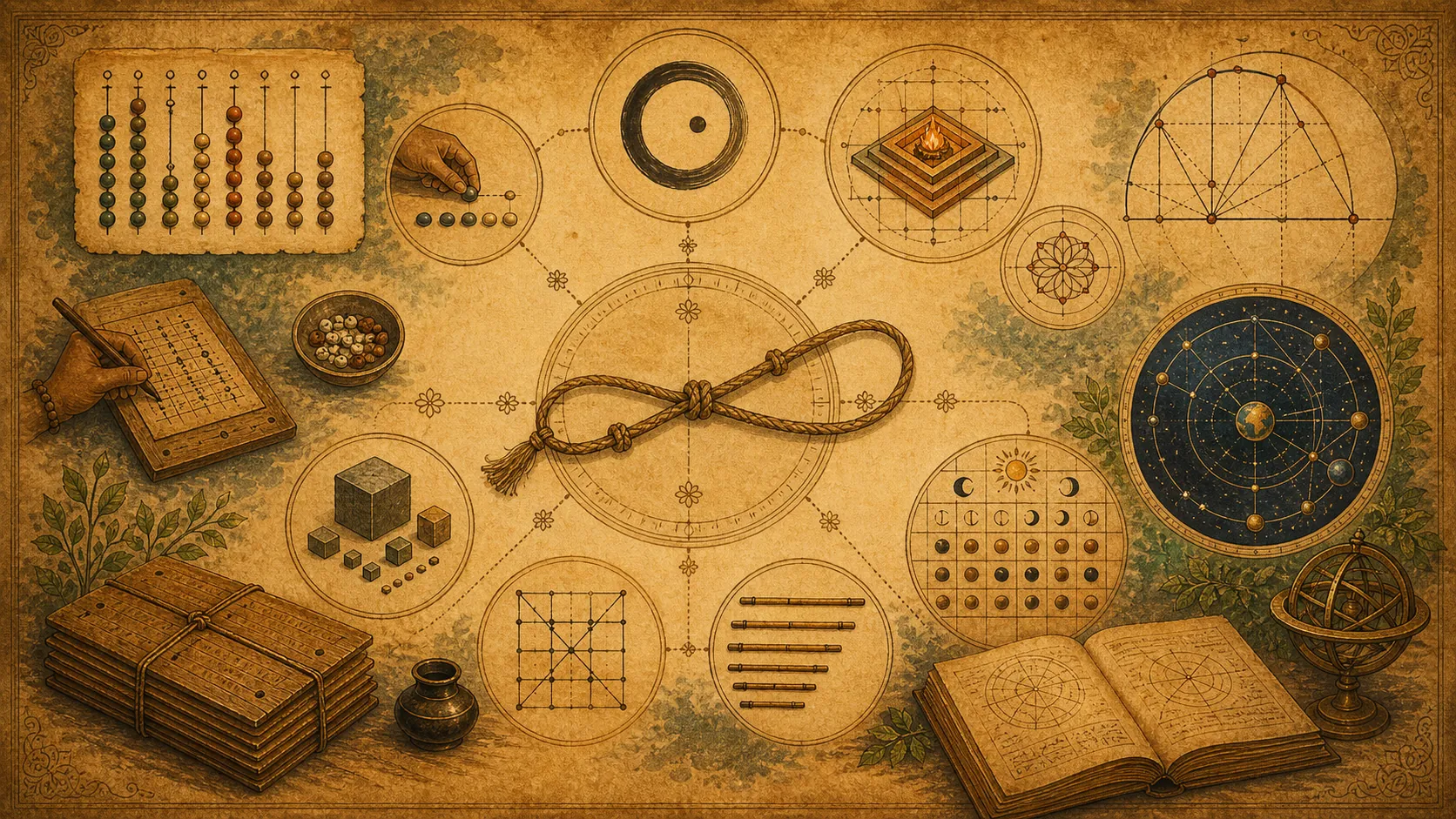
number, geometry, calculation, and measure
Mathematics, Computation & Measurement
Indic civilization developed systems of number, measurement, geometry, computation, astronomy-related mathematics, and mathematical reasoning.
Gaṇita · Śulba geometry · Numerals · Place value · Zero · Algebra · Trigonometry · Combinatorics · Calendar mathematics · Astronomical computation · Measurement systems
07cluster 03 · Time, Number & Cosmoscoming
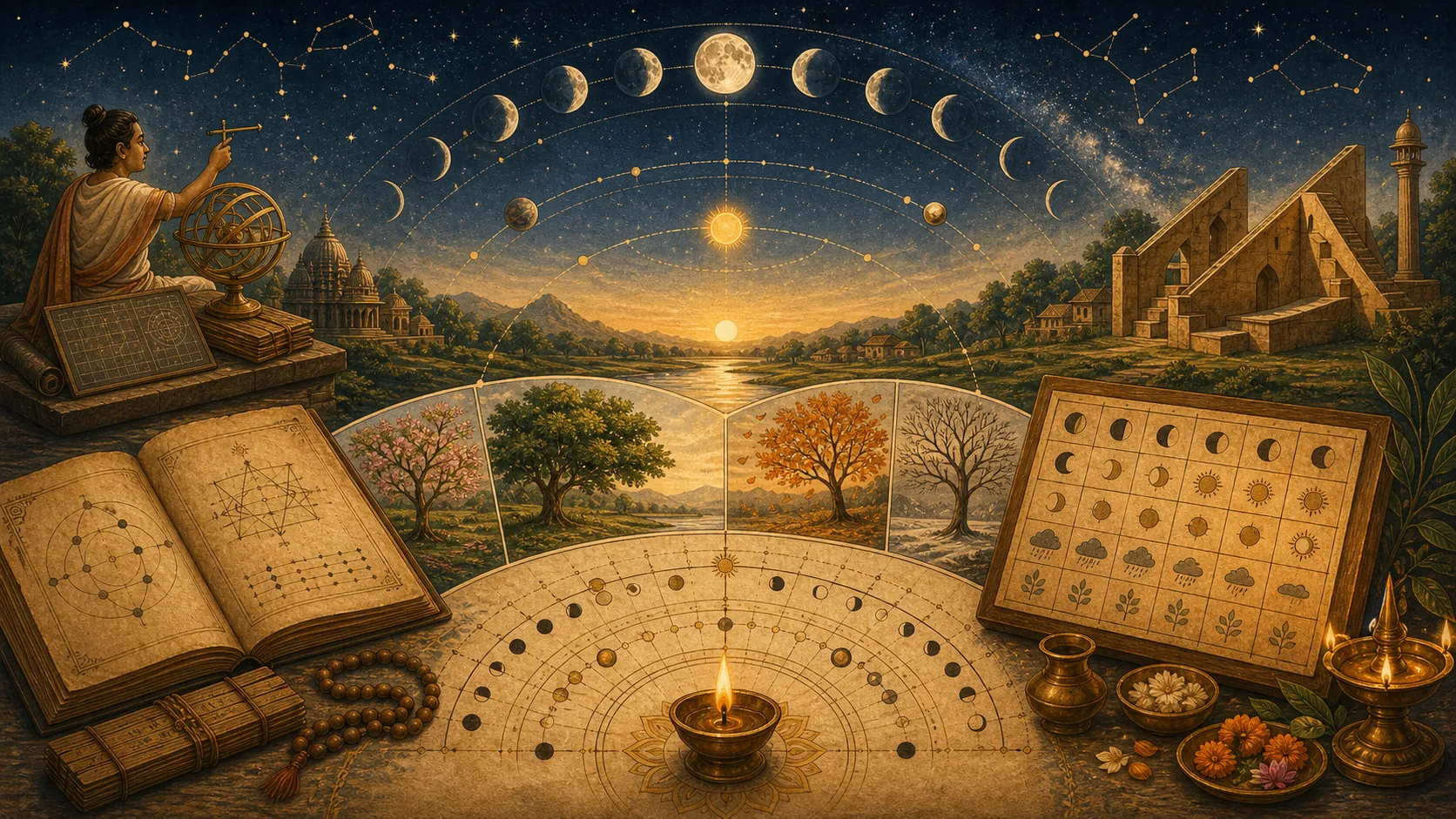
sky, calendar, cycles, and sacred time
Astronomy, Jyotisha & Panchang
Jyotiṣa is traditionally understood as a Vedāṅga concerned with time, celestial cycles, calendrics, ritual timing, and the interpretation of relationships between cosmic and human rhythms. Vidyame presents its textual foundations, internal categories, historical development, regional traditions, and contemporary practice with clear source attribution.
Tithi · Nakshatra · Muhurta · Panchang · Lunar cycles · Solar cycles · Calendrics · Astronomical observation · Sacred time · Ujjain time traditions
Traditional claims, historical evidence, astronomical calculation, and contemporary empirical evaluation are identified separately.
↔ Lived through daily rhythm in Live →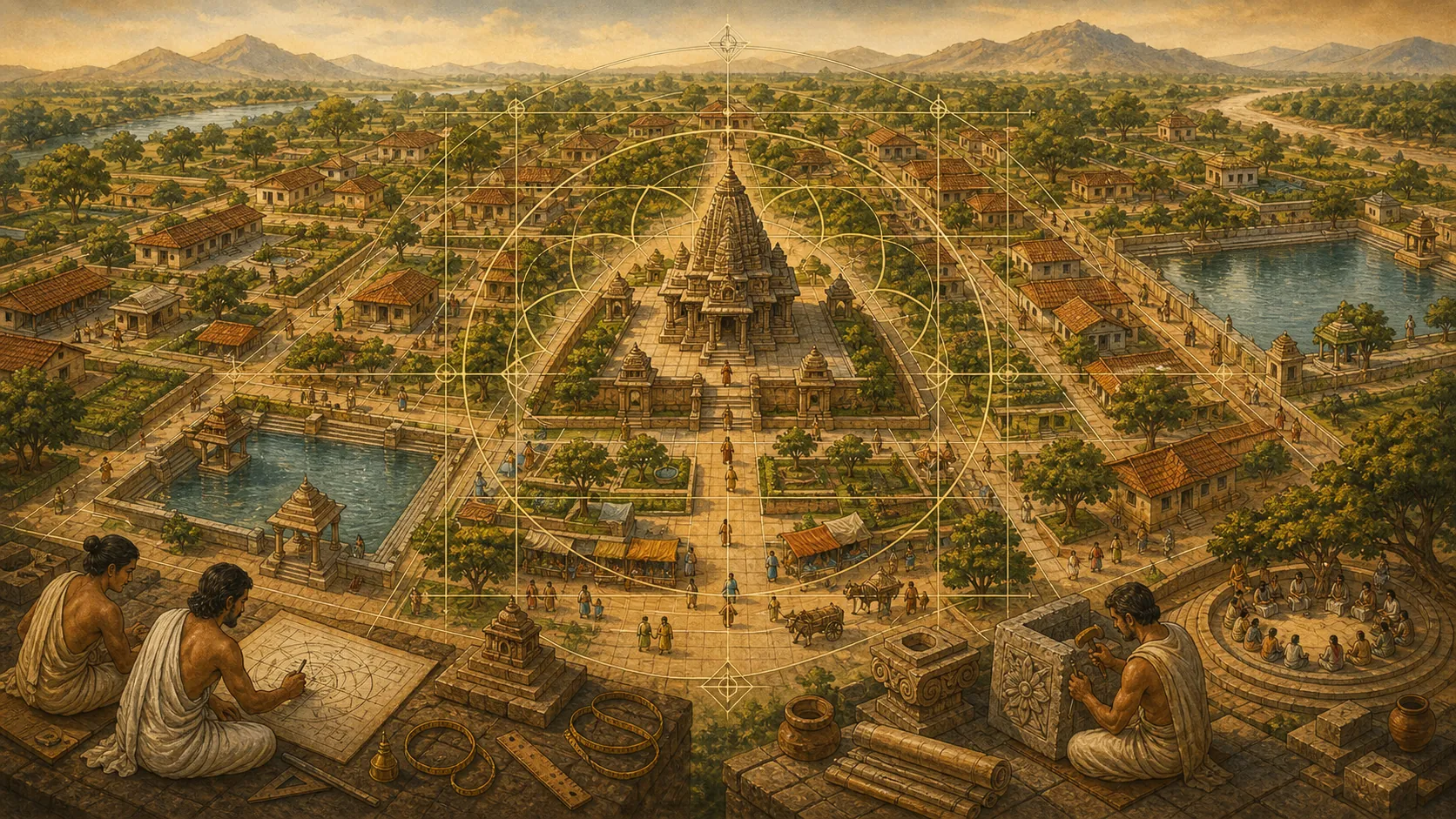
08cluster 04 · Place, Ecology & Applied Technologiescoming
space, proportion, sacred geometry, and memory
Architecture, Vastu, Śilpa & Place
Indic systems of architecture and place connected built space to proportion, orientation, sacred geometry, ecology, temple design, homes, towns, and memory.
Vastu · Śilpa · Sthapatya · Temple plans · Homes · Towns · Kshetras · Sacred geography · Civic spaces · Water structures · Place-based memory
09cluster 04 · Place, Ecology & Applied Technologiescoming
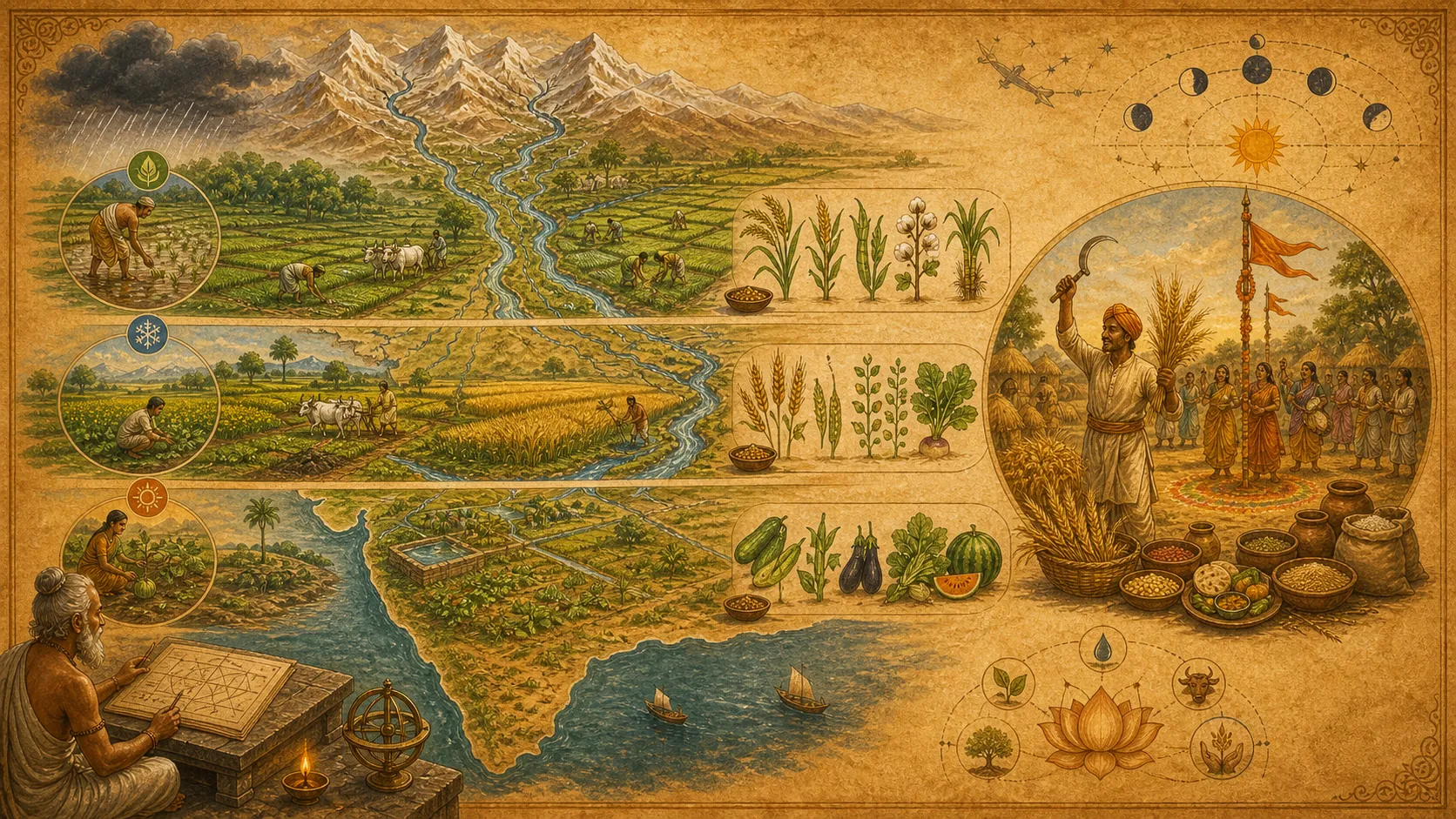
soil, water, food, season, and restraint
Agriculture, Ecology & Food Systems
Agriculture and ecological knowledge connected food, soil, water, season, animals, plants, village life, and restraint into a living relationship with nature.
Agriculture · Seasonal cycles · Soil · Water · Food · Animal care · Vṛkṣāyurveda · Sacred groves · Ecological restraint · Village life · Sustainability · Food as culture
10cluster 04 · Place, Ecology & Applied Technologiescoming
craft, tools, water systems, and built technologies
Materials, Engineering & Applied Technologies
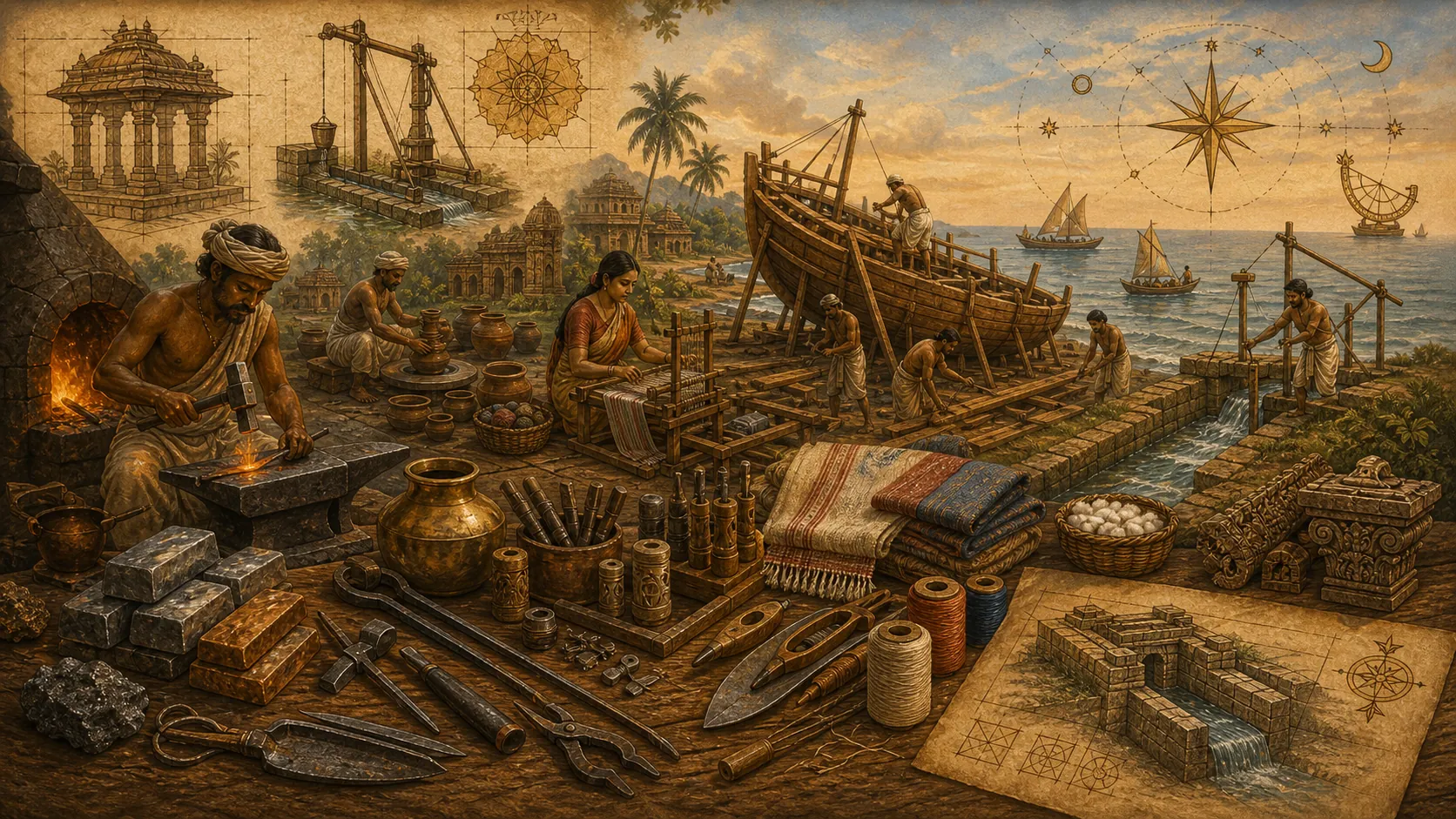
Indic civilization developed applied knowledge in materials, metallurgy, crafts, water systems, engineering, textiles, tools, navigation, and built technologies.
Metallurgy · Iron and steel traditions · Materials · Rasashastra · Civil engineering · Water systems · Shipbuilding · Navigation · Textiles · Crafts · Tools · Applied technologies
Presented through available textual, material, archaeological, inscriptional, experimental, and historical evidence, with the strength and limits of each claim made visible.
11cluster 05 · Arts, Practice & Life Formationcoming
sound, movement, story, and aesthetic experience
Sangeet, Natya, Rasa & Arts
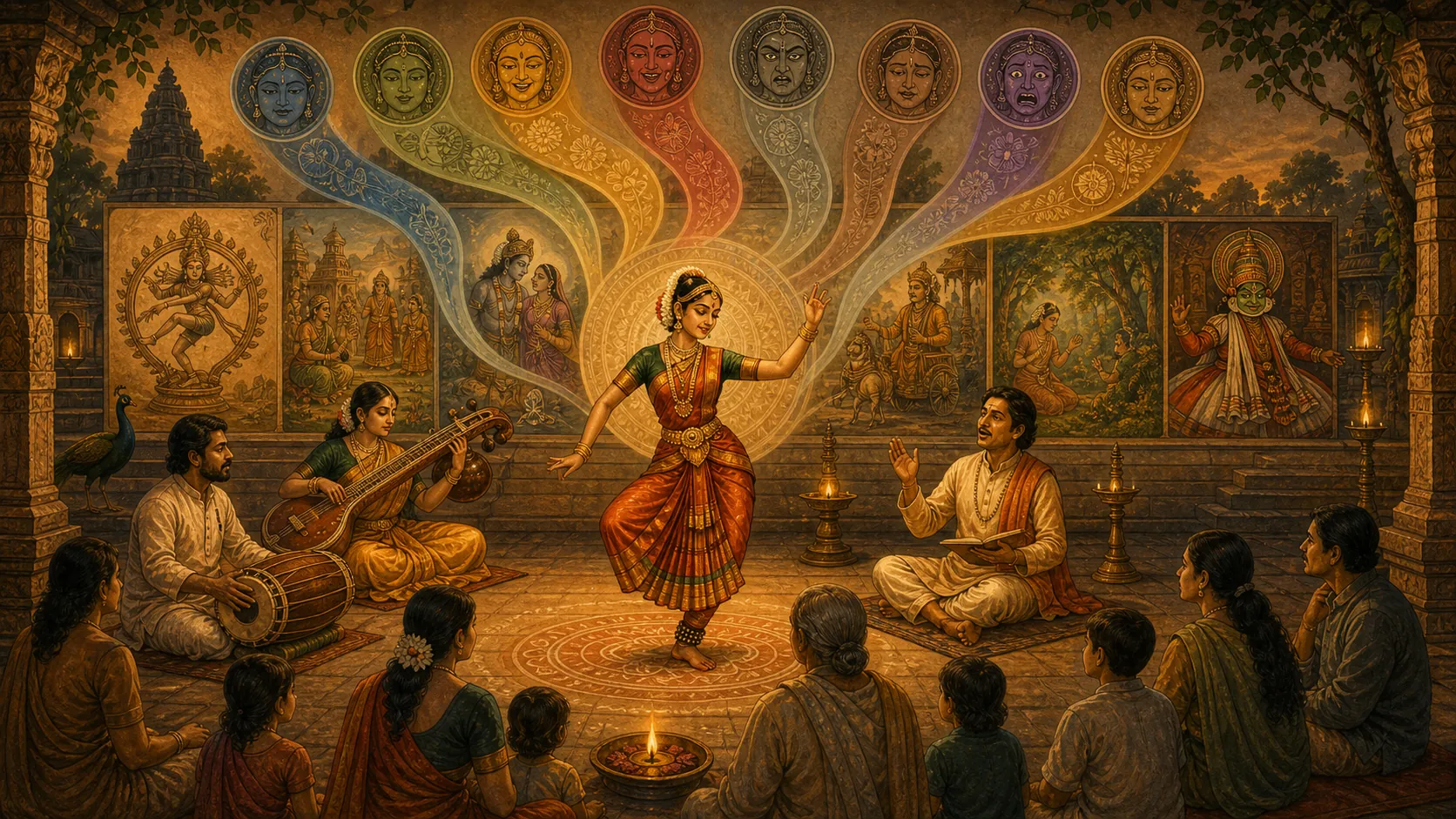
Music, drama, dance, poetry, storytelling, and rasa formed systems for expressing emotion, teaching Dharma, preserving memory, and refining human experience through beauty.
Sangeet · Natya · Rasa · Dance · Drama · Music · Instruments · Storytelling · Kathā · Performance · Aesthetic experience · Sacred expression
12cluster 05 · Arts, Practice & Life Formationcoming
repeated disciplines that refine the person
Sādhana & Inner Practice
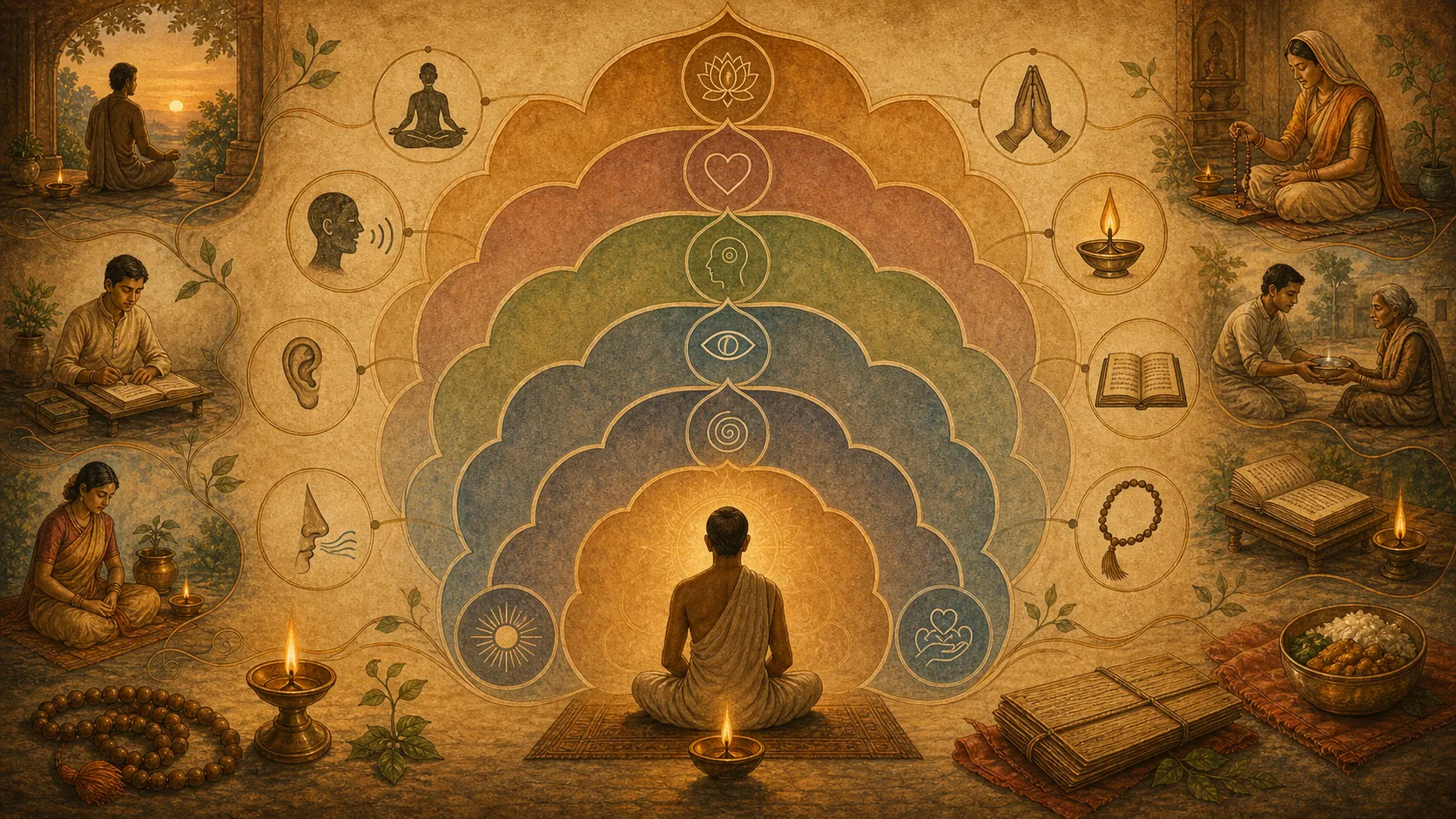
Sādhana refers to repeated disciplines that refine the person. It trains body, speech, mind, senses, attention, intention, devotion, and conduct so that life can move closer to Dharma.
Pūjā · Japa · Mantra · Dhyāna · Prāṇāyāma · Vrata · Svādhyāya · Seva · Aarti · Darśan · Daily discipline · Devotional practice · Yogic practice · Inner purification
Sādhana is not empty repetition; it is practice that shapes the inner instrument.
13cluster 05 · Arts, Practice & Life Formationcoming
refinement, transitions, responsibility, and continuity
Samskāra & Life Formation
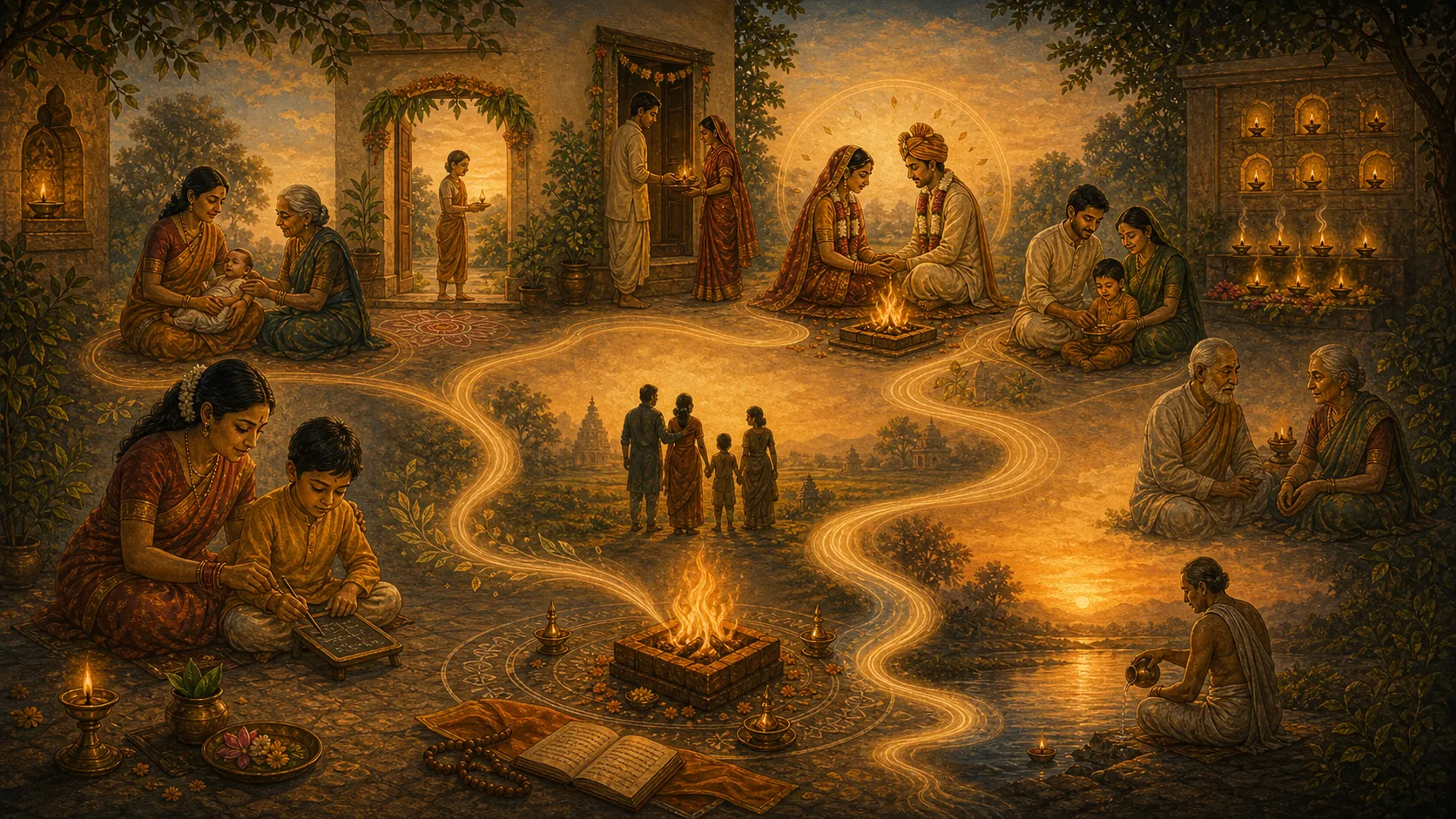
Samskāra refers to refinement, formation, and life-shaping impressions. It marks important transitions and connects the individual to family, society, ancestors, Dharma, and sacred continuity.
Birth · Naming · First feeding · Beginning education · Marriage · Parenthood · Home entry · Death and remembrance · Ancestor connection · Family duties · Community witnessing · Blessing · Responsibility · Character formation
Samskāra gives life transitions meaning, dignity, responsibility, and continuity.
↔ Practiced as life milestones in Live →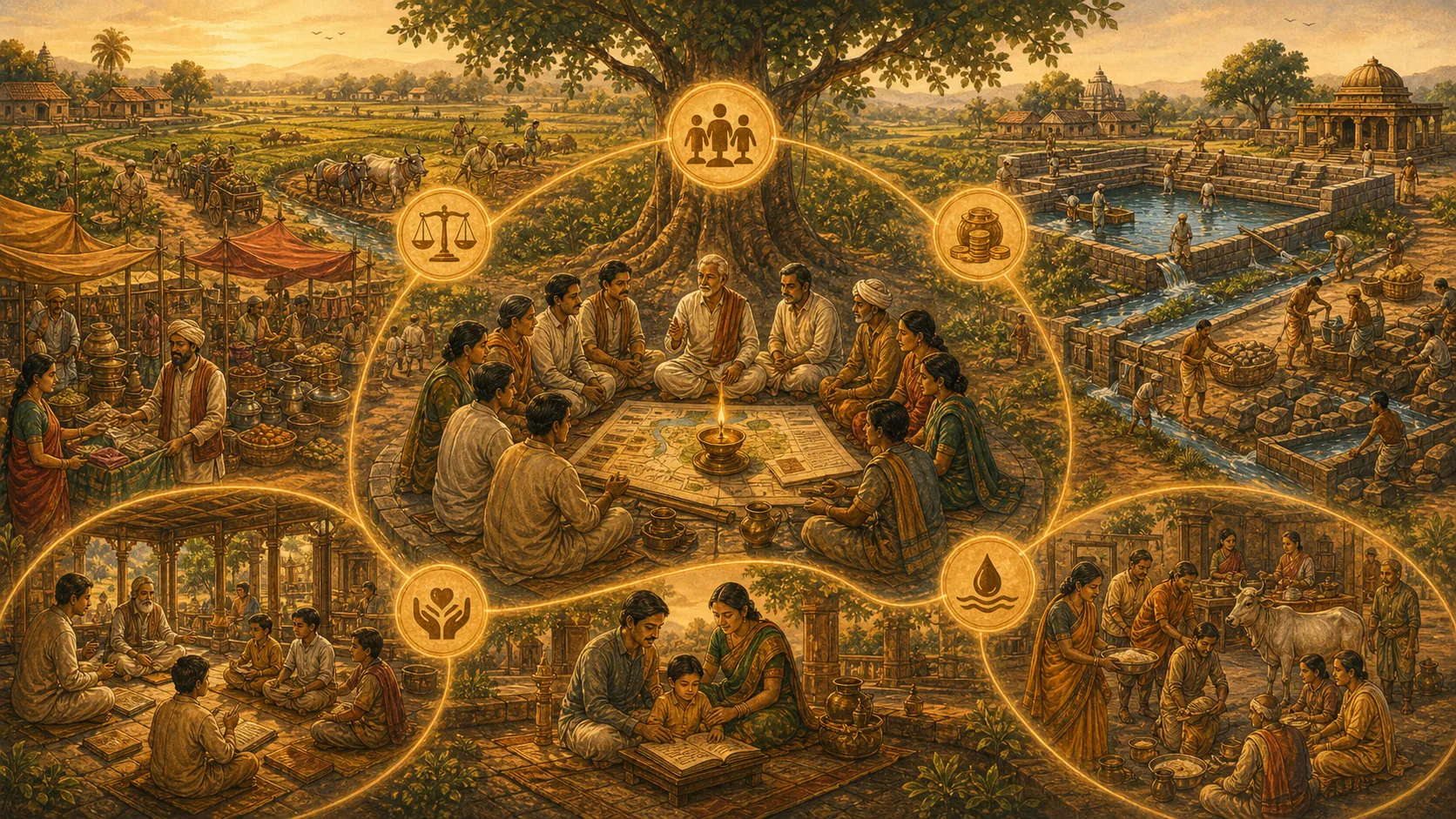
14cluster 06 · Society, Order & Transmissioncoming
leadership, economy, responsibility, and order
Governance, Artha & Social Order
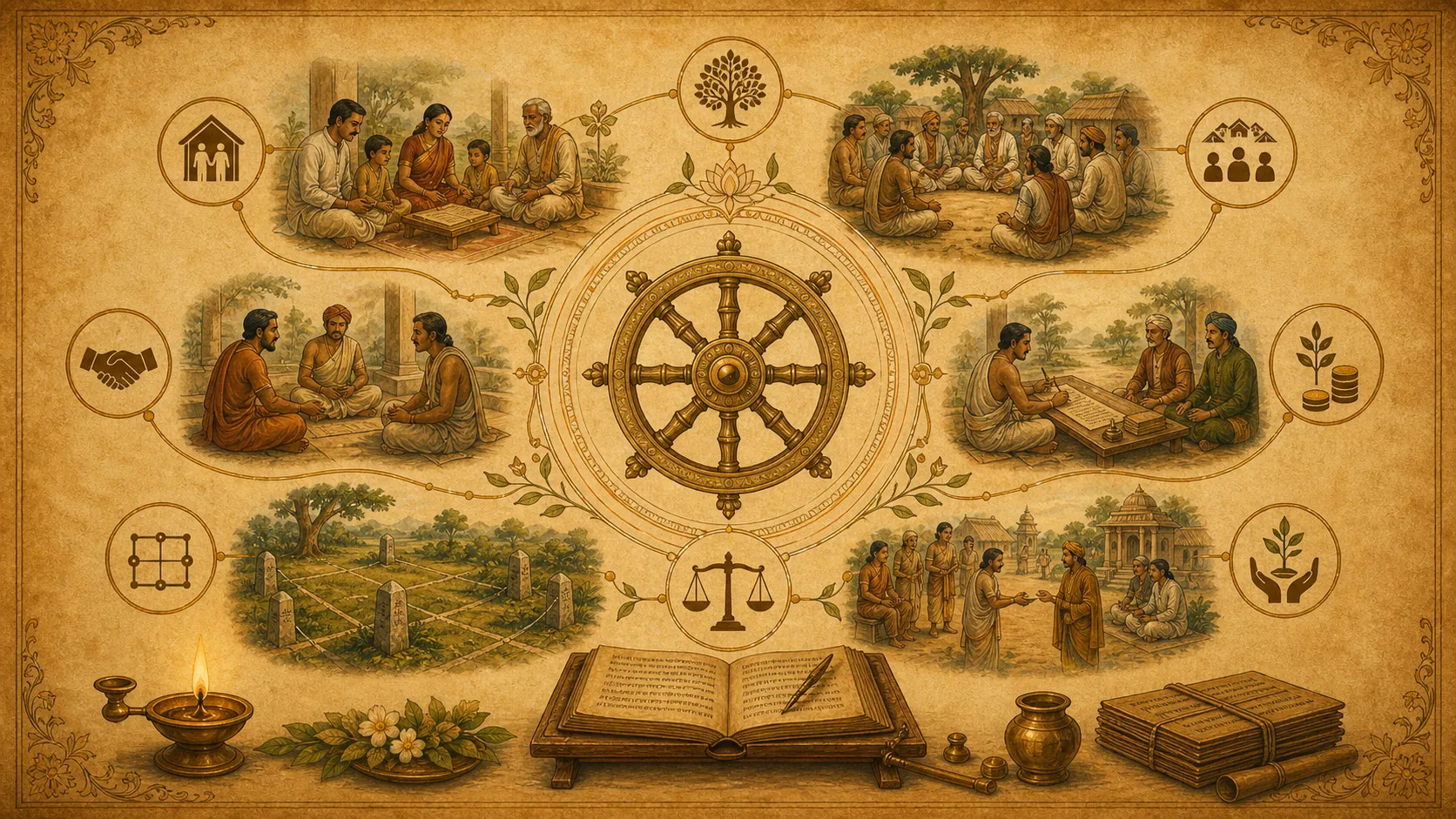
Indic civilization developed systems for governance, economy, work, leadership, administration, public responsibility, and social order.
Arthaśāstra · Rājadharma · Governance · Administration · Economy · Business · Leadership · Work · Conflict · Public order · Seva · Social responsibility
15cluster 06 · Society, Order & Transmissioncoming
duty, custom, accountability, and order
Law, Dharmaśāstra & Justice
Dharmaśāstra and related traditions examine Dharma as it applies to conduct, custom, responsibility, family, inheritance, justice, governance, social order, and changing circumstances. Their interpretation draws upon Śruti, Smṛti, ācāra, reasoned deliberation, and established commentarial traditions, with significant variation across texts, regions, periods, and communities.
Dharmaśāstra · Law · Custom · Duties · Justice · Accountability · Social order · Inheritance · Conflict resolution · Crime and consequence · Kingship · Local governance
Presented as a diverse interpretive tradition—not as one timeless or directly transferable modern legal code.
16cluster 06 · Society, Order & Transmissioncoming
discipline, courage, restraint, and defense
Dhanurveda, Protection & Strategy
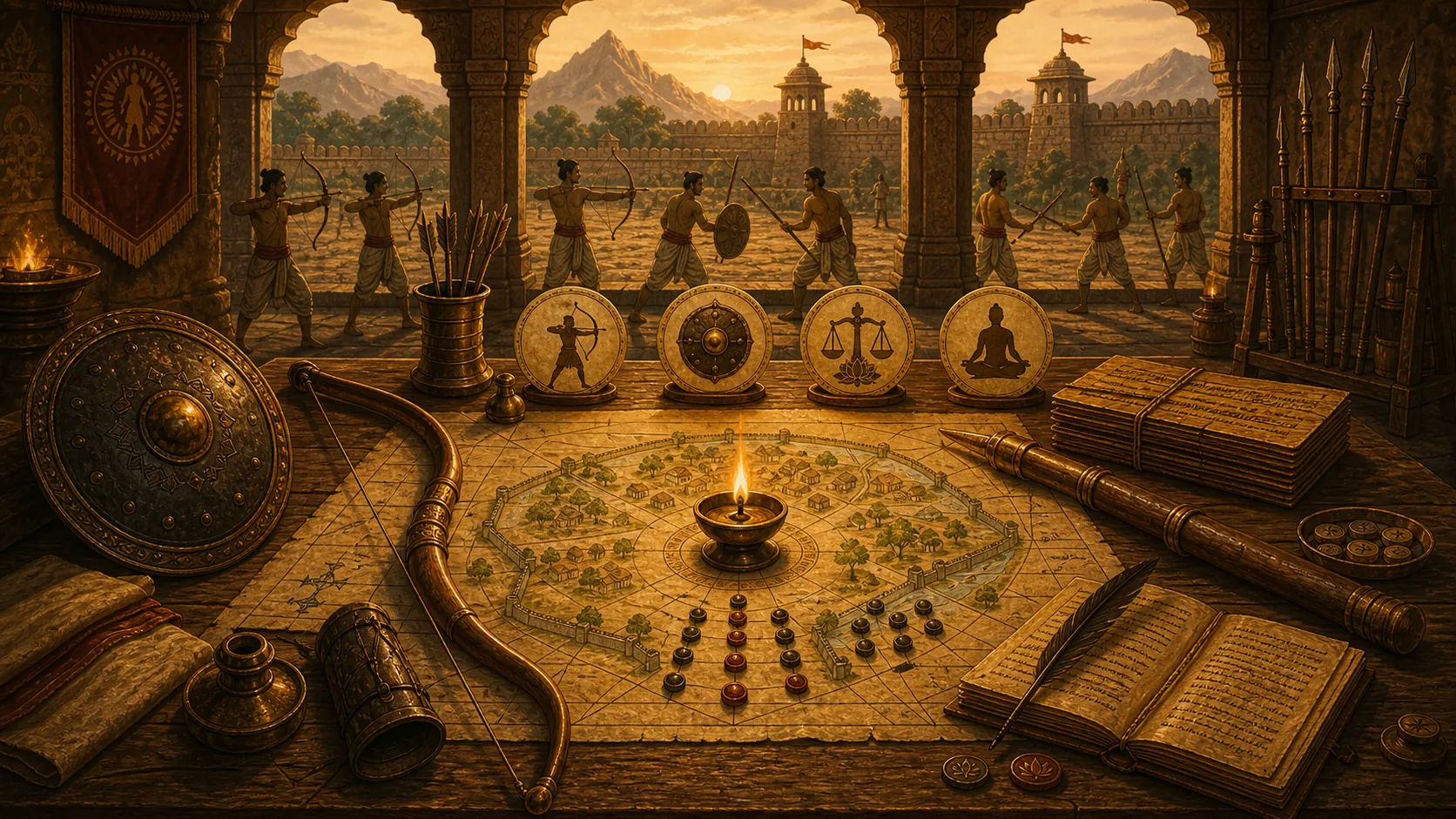
Dhanurveda and related traditions organized knowledge around protection, discipline, martial training, strategy, courage, restraint, and the defense of society.
Dhanurveda · Archery · Martial training · Discipline · Defense · Strategy · War ethics · Physical training · Protection · Courage · Restraint
17cluster 06 · Society, Order & Transmissioncoming
teaching, memory, commentary, and preservation
Education, Debate & Knowledge Transmission
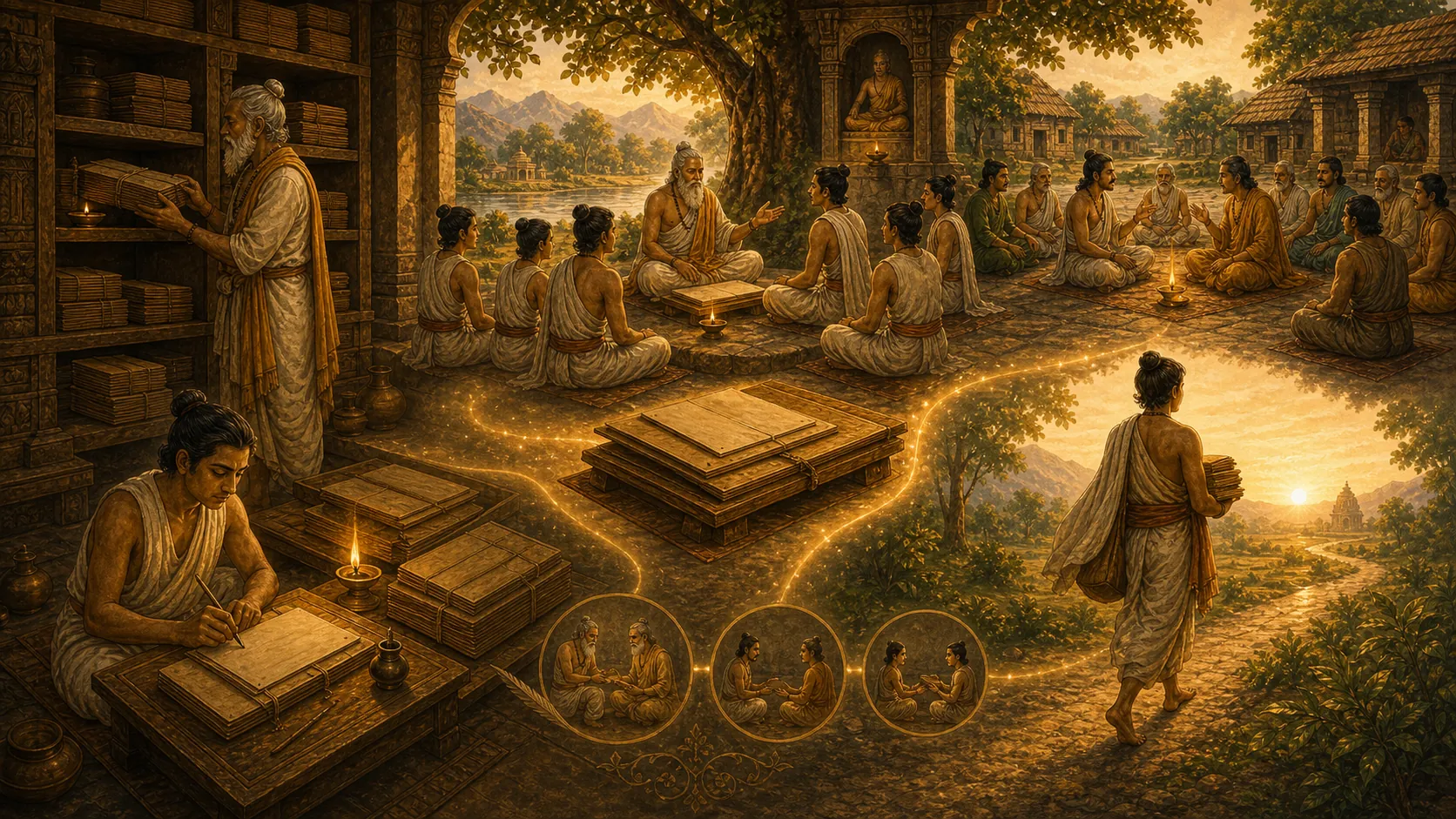
Indic civilization created systems for teaching, memorization, commentary, debate, oral transmission, teacher-student learning, institutions, and preservation across generations.
Guru-śiṣya · Gurukula · Oral tradition · Memorization · Commentary · Śāstrārtha · Satsang · Pedagogy · Lineage · Institutions · Libraries · Manuscripts
Systems that shaped a civilization
Together, these systems show how Indic civilization organized knowledge for the whole of life: body, mind, language, time, number, cosmos, health, place, nature, arts, practice, family, society, law, protection, and transmission.
Vidyame brings these systems into a modern learning experience so seekers can understand not only what was known, but how knowledge was organized, practiced, preserved, and lived.
Systems are where wisdom becomes structured knowledge.
Explore Systems in Vidyame