Authors & writers
Essays, books, explanatory writing, narrative and sourced interpretation.
See your path →

For creators & authors
If you write, teach, translate, explain, narrate, perform, document, or preserve Indic knowledge, Vidyame is being built with you.
Explore how to contribute ↓A civilizational effort
Indic knowledge remains distributed across books, private collections, oral traditions, regional languages, institutions and family memory. Vidyame brings it into a source-aware ecosystem for discovery, depth, continuity and relationship.
Who can contribute
Vidyame welcomes many contributors while keeping authorship, traditional teaching, scholarship, practice and personal experience clearly distinguished.
Essays, books, explanatory writing, narrative and sourced interpretation.
See your path →Translations, word meanings, annotations and named commentarial perspectives.
See your path →Courses, lectures, source study, research and guided pathways within a clear role.
See your path →Narration, documentary, visual explanation, interviews and civilizational storytelling.
See your path →Recitation, music, dance, theatre, kathā and performance knowledge.
See your path →Practice, craft, place-based memory, family knowledge and living traditions.
See your path →What creators can build
A contribution is not merely a post. It can become a source object, lesson, pathway, collection, question, practice guide or Kendra resource.
The Vidyame creator standard
Editorial review protects the creator’s voice while giving learners the source, tradition, method and limits needed to understand it responsibly. Read Standards & Rights →
Use relevant Indic categories before imposing external ones.
Identify the source, commentator, tradition, lineage, region, language or method.
Do not present one sampradāya or personal synthesis as unanimous tradition.
Distinguish traditional interpretation, evidence, scholarship, adaptation and opinion.
Preserve Sanskrit terms where needed while helping new learners enter them.
Organize work for discovery, learning, questions, community and preservation.
Your work, your voice
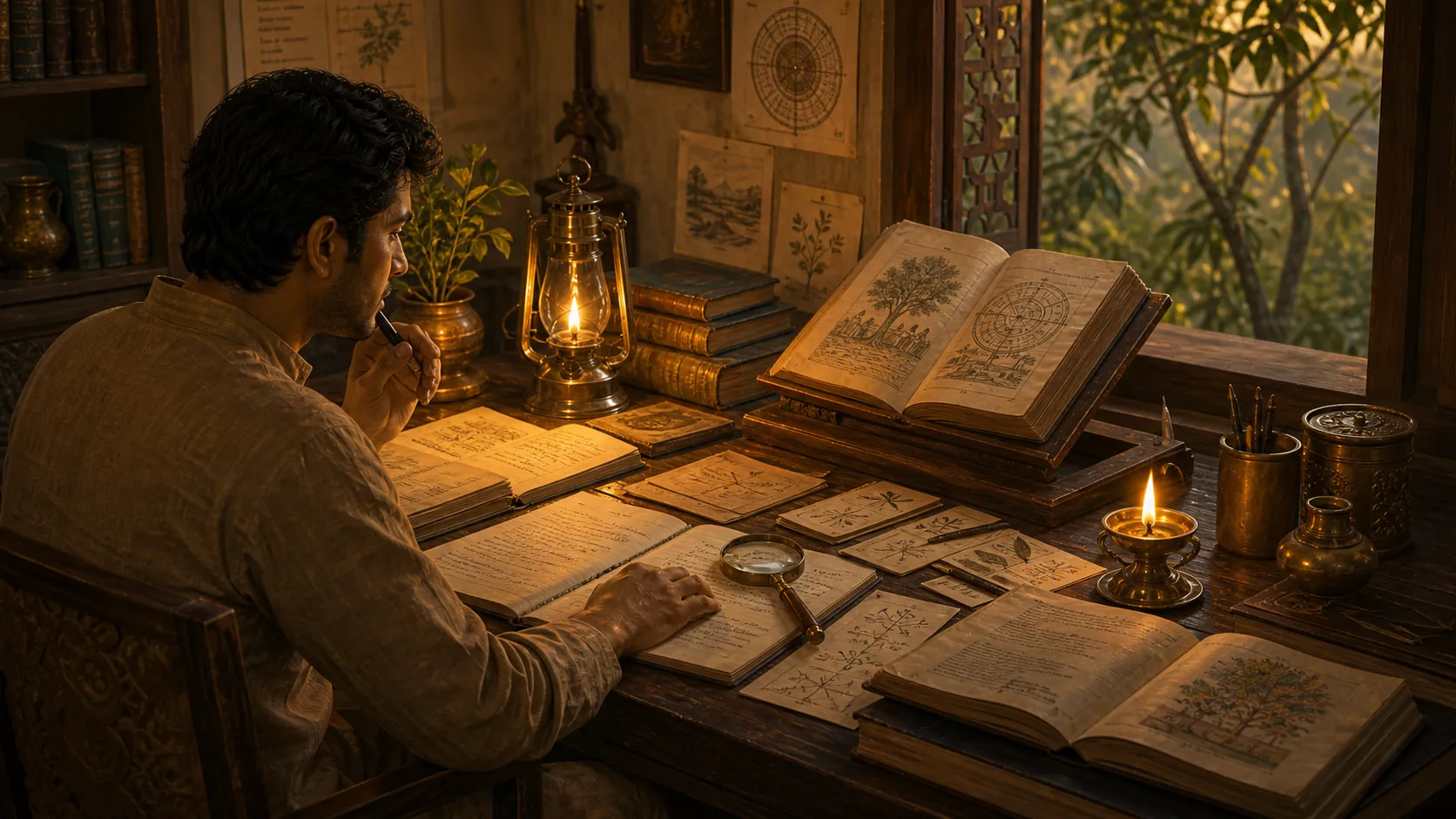
Trust between creator, learner and knowledge depends on visible authorship, provenance, permissions and interpretive position.
Name, role, biography, training, lineage, affiliation and languages remain visible.
Original writing, translation, commentary, audio, video and teaching receive attribution.
Traditional, archival, published, institutional or community sources are recorded.
Rights, licences, public-domain status, consent and permitted uses are established.
From content to community
Move beyond scattered publishing by connecting work to where learners discover, study, question and participate.
Connect work to sources, literature, systems, traditions, topics, practices, places and arts.
Explore →Shape content into lessons, pathways, language layers, reflection and age-aware learning.
Explore →Answer real questions with sources, named perspectives and appropriate uncertainty.
Explore →Build study groups, sessions, collections, discussion and projects around your field.
Explore →How contribution works
Early contributors help shape the content foundation, creator tools, editorial standards and relationship between knowledge and community. View the complete contribution path →
Share who you are, what you create, your knowledge areas, languages and training.
Propose original work or material you have the rights and context to share.
Identify provenance, textual basis, perspective, permissions and relevant limits.
Review clarity, attribution, context, safety, rights and fit without forcing uniformity.
Connect the work to Discover, learning pathways, questions and Kendras.
Respond, teach, correct, build collections and deepen the work over time.
Join as a creator
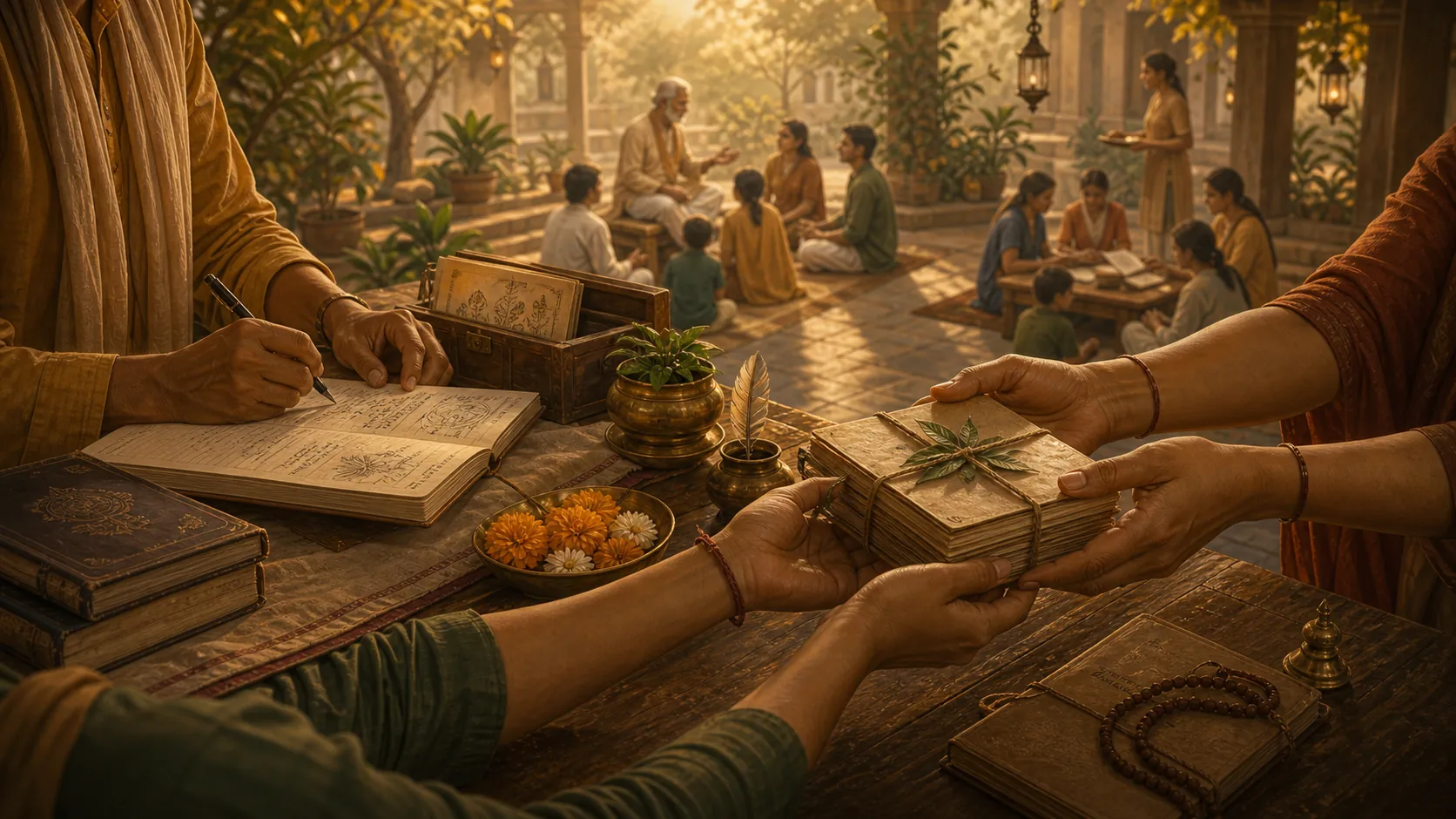
Vidyame is being shaped by creators, authors, translators, scholars, teachers, artists and storytellers who believe this inheritance should be preserved, organized and shared with care.
Express interest as a creator →