Language shaped into literary art
Classical kāvya
Encounter mahākāvya, lyric, campū, ornate prose, court poetry, and the poets who developed classical literary expression.
- Kāvya
- Mahākāvya
- Campū
- Gadya

03
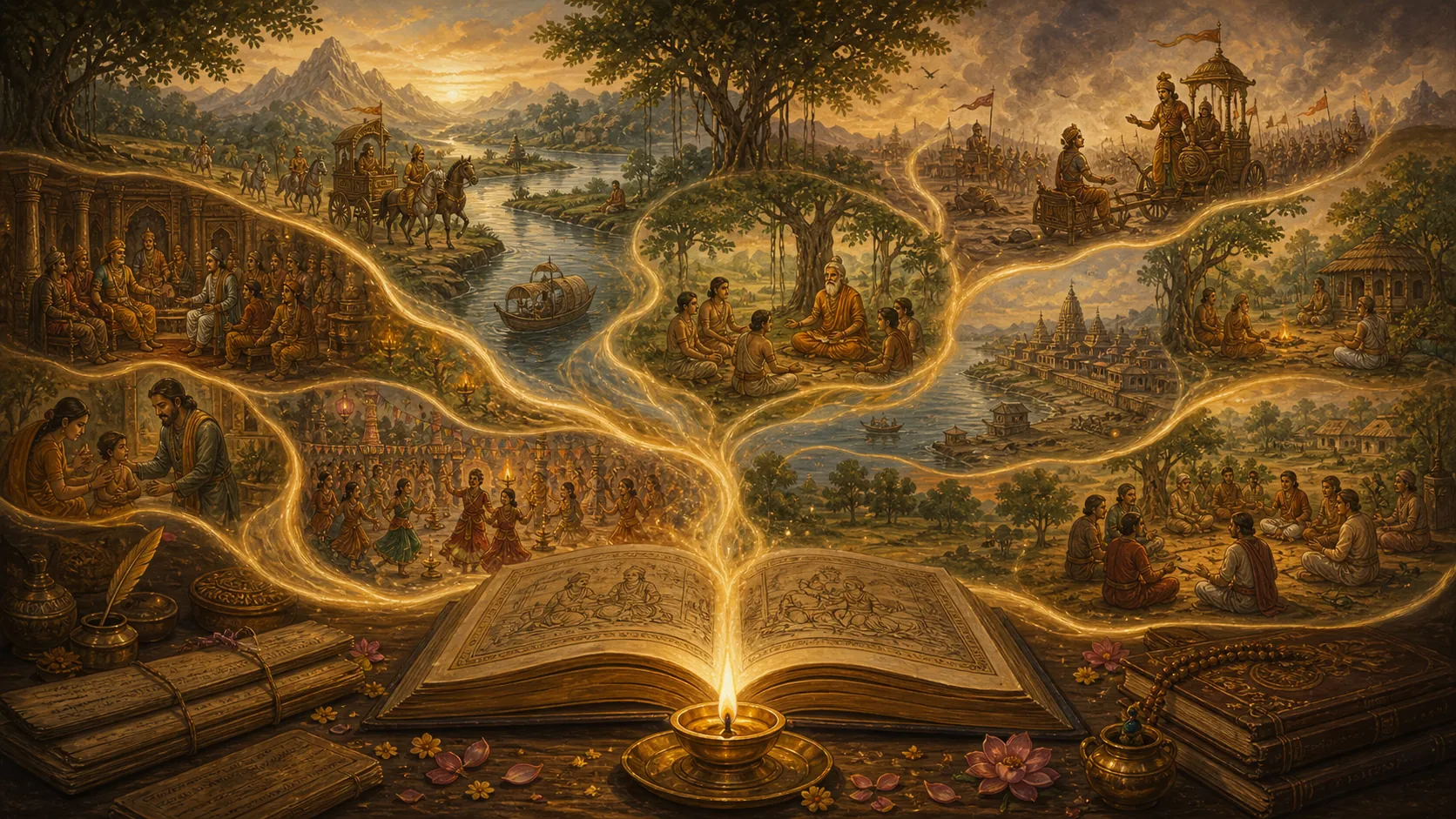
Poetry, drama, story and literary imagination
Explore the creative literature that grew from, around, and beyond foundational sources: kāvya, drama, poetry, narrative, bhakti compositions, regional literatures, oral works, essays, novels, and modern writing.
Explore this fieldHow to enter
Literature is presented as authored or communally transmitted expression, clearly distinguished from foundational source authority while showing the sources, traditions, languages, and worlds that shaped it.
Explore the field
Choose an entrance, then follow its sources, terms, people, places, practices, and connected questions.
Language shaped into literary art
Encounter mahākāvya, lyric, campū, ornate prose, court poetry, and the poets who developed classical literary expression.
Story written for performance
Explore Sanskrit and regional drama alongside rasa, dhvani, alaṅkāra, dramaturgy, and traditions of literary criticism.
Poetry moving through community
Follow hymns, padāvalī, abhaṅga, vacana, bāṇī, kīrtana, and other compositions across languages and sampradāyas.
Civilization speaking in many languages
Enter Tamil, Kannada, Telugu, Malayalam, Marathi, Bengali, Hindi, Punjabi, Assamese, Odia, Gujarati, Kashmiri, and other literary traditions.
Works carried in voice and memory
Discover oral epics, ballads, folktales, songs, proverbs, tribal literature, and forms whose life cannot be reduced to a written text.
New forms, changing worlds
Explore novels, short stories, essays, memoir, modern poetry, literary criticism, translation, diaspora writing, and digital literature.
Questions people bring
Each answer should lead back to sources, named interpretations, and related pathways—not stop at a summary.
Guided pathways
Start with a shaped journey. Each pathway brings together sources, explanation, media, reflection, and related fields.
Meet genre, poet, language, rasa, poetics, patronage, and reception.
Follow in the Vidyame app →Connect poets, sampradāyas, song forms, regions, performance, and community memory.
Follow in the Vidyame app →Move through colonial encounter, print, translation, new genres, nation, region, and diaspora.
Follow in the Vidyame app →The Vidyame Promise
Literature is presented as authored or communally transmitted expression, clearly distinguished from foundational source authority while showing the sources, traditions, languages, and worlds that shaped it.
How Vidyame approaches sourcesContinue discovering